Over the last two years, AI has quietly moved from answering questions to making decisions on our behalf. The shift is already visible. Today, there are more than 8 billion voice assistant devices in use globally, and millions of product searches happen through voice interfaces every day.
At the same time, technology companies are building AI agents that can search, compare, and purchase products automatically. Instead of scrolling through product pages, we may soon simply describe what we want and let the AI handle the rest.
You might say, “Find the best moisturiser for sensitive skin. I live in a humid climate. Fragrance-free. Under ₹3,000.” The agent scans ingredients, reviews, dermatologist claims, price, and delivery speed, then recommends a product or simply buys it.
In that moment, something fundamental changes.
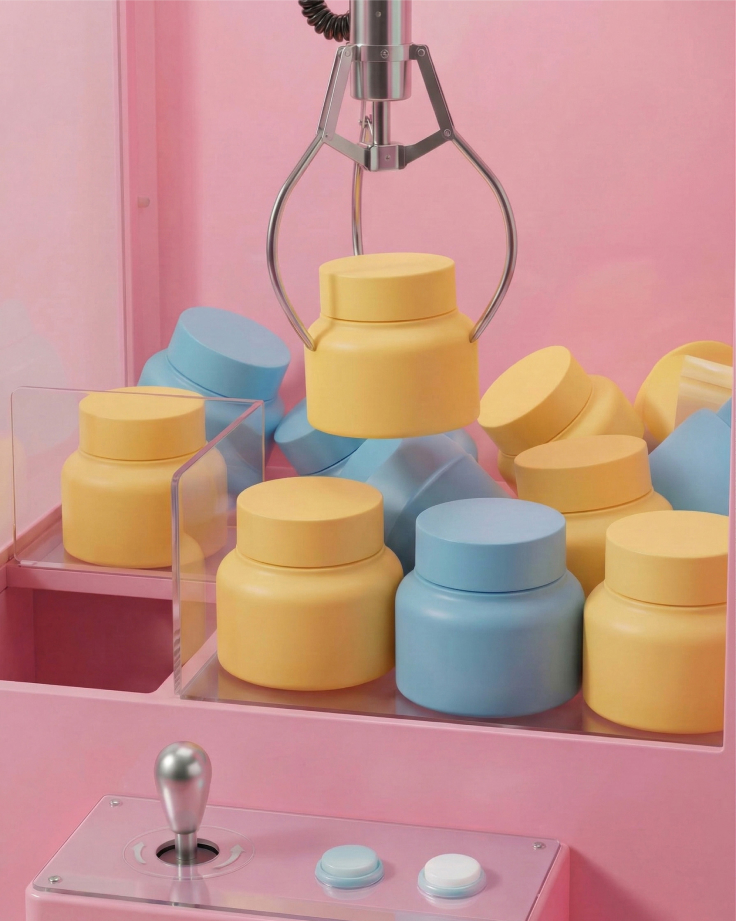
What happens to design when the person choosing the product isn’t human?
Products Are Never Just About Performance
Consumer behaviour has never been purely rational. We like to imagine that people compare specifications, evaluate performance claims, and choose the most effective product. In reality, most decisions are shaped by perception long before the product is used.
Packaging plays a powerful role in creating that perception. Colour, typography, materials, shape, and weight all signal something about the product before the formula ever touches the skin. These elements communicate price tier, brand philosophy, and cultural positioning. They shape the emotional context in which a product is experienced.
This is exactly why brands of similar quality can occupy very different spaces in the market. For years, MAC Cosmetics built its reputation on performance and professional credibility. Its packaging is understated, functional, and rooted in the language of makeup artists. Meanwhile, the gold, faceted tubes of Charlotte Tilbury Beauty turn everyday makeup into something glamorous and collectable. The packaging signals luxury and fantasy long before the formula is experienced.
Both brands succeed, but for different reasons. Design shapes how consumers perceive the product before they ever try it.
The Influence
For years, design was the first conversation between a brand and a consumer. AI agents, however, disrupt this dynamic entirely. They do not wander through aisles or pause because something catches their eye. They do not respond to colour, form, or tactile cues. Instead, they process structured information: ingredient lists, clinical claims, product ratings, pricing, and availability.
What appears beautiful or distinctive to a human may be irrelevant to an algorithm.
Human preferences are also almost never static. They evolve over time, in context, and with emotion. Even if AI becomes extremely good at understanding individual preferences, human behaviour itself is rarely linear.
The Risk Of An Algorithmic Marketplace
The greater risk is not that design or packaging experiences disappear, but that brands begin optimising exclusively for algorithms. The result could be a marketplace full of perfectly ranked products that are technically excellent but emotionally indistinguishable.
It also overlooks the fact that packaging lives far longer than the moment of purchase. Even if an AI selects the item, the consumer still has to live with it.
A product still arrives at your door. It still sits on your shelf. You pick it up every day and incorporate it into your routine. Over time, the product becomes part of your environment and, in subtle ways, part of your identity.
This suggests that the role of packaging may not disappear at all, it may simply shift.
Historically, design helped win the purchase. In a world of AI-mediated commerce, it may instead become responsible for validating the purchase. The experience of holding and using a beautifully designed product reassures the consumer that the choice, whether made by them or by an algorithm, was the right one.
Design may no longer be what convinces someone to pick a product off a shelf. But it may still be what makes the product worth keeping.
Want to stay updated?
If you’re interested to learn the secrets behind a great brand, you need to subscribe!
Let’s start
creating together.

